
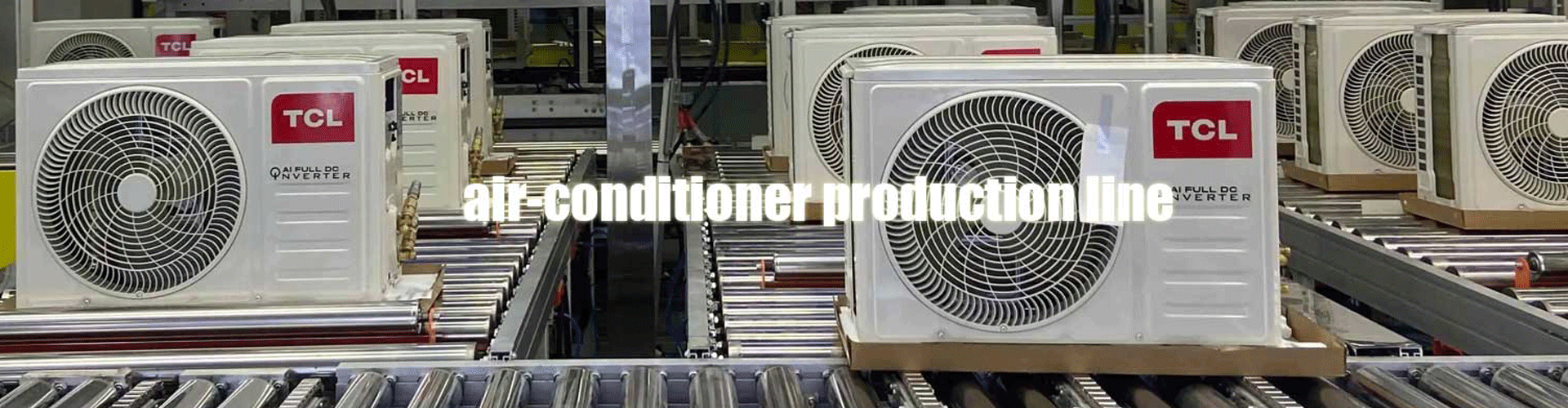
Product Categories
PRODUCT CATEGORYContact Us
CONTACT USMobile phone:+86-15395152932
mail:sale@assyauto.com
Address:Electronic Information Industrial Park, Shunyi District, Beijing City
Location:Home >> News >> Company News >> Introduction to the production process of household air conditioner assembly line
Introduction to the production process of household air conditioner assembly line
Published:2026-03-18
Author:Jingliu Equipment Technology (Beijing) Co., Ltd.
1. Overview of the air conditioning production line
The production line is specially designed for the assembly of external and internal units of household and commercial air conditioners. It adopts modular layout and flexible manufacturing concepts to realize the full-process automated production from the online production of parts to the offline production of finished products. The production line is compatible with air conditioning products with a variety of cooling capacity specifications (1HP-5HP). The single-line cycle can reach 45-60 seconds per unit, and the annual production capacity is designed to be 500,000 – 800,000 units.
2. Core technology architecture
1. Intelligent conveying system
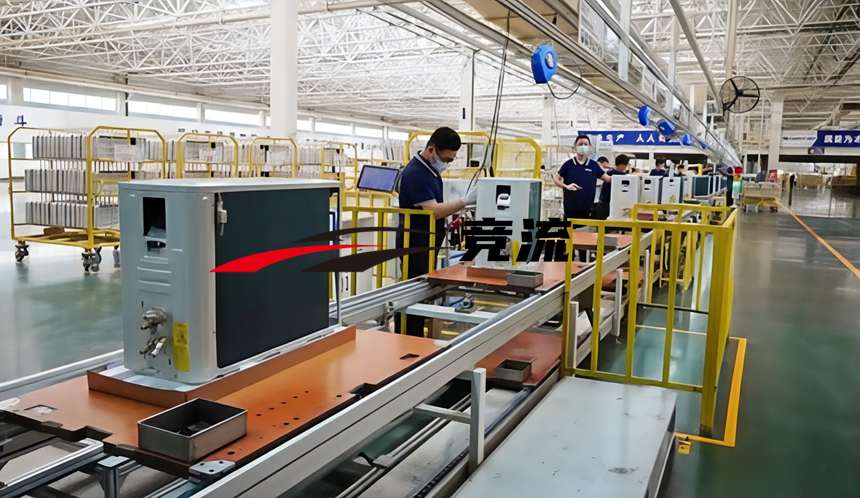
The production line adopts a double-speed chain + roller line compound conveying mode, and cooperates with the AGV intelligent dispatching system to achieve accurate material flow between workstations. The conveying line is equipped with a frequency conversion speed regulating device, which can flexibly adjust the running speed according to order requirements; key workstations are equipped with a jacking positioning mechanism to ensure that the assembly accuracy is controlled within ±0.5mm.
2. Robot automated assembly
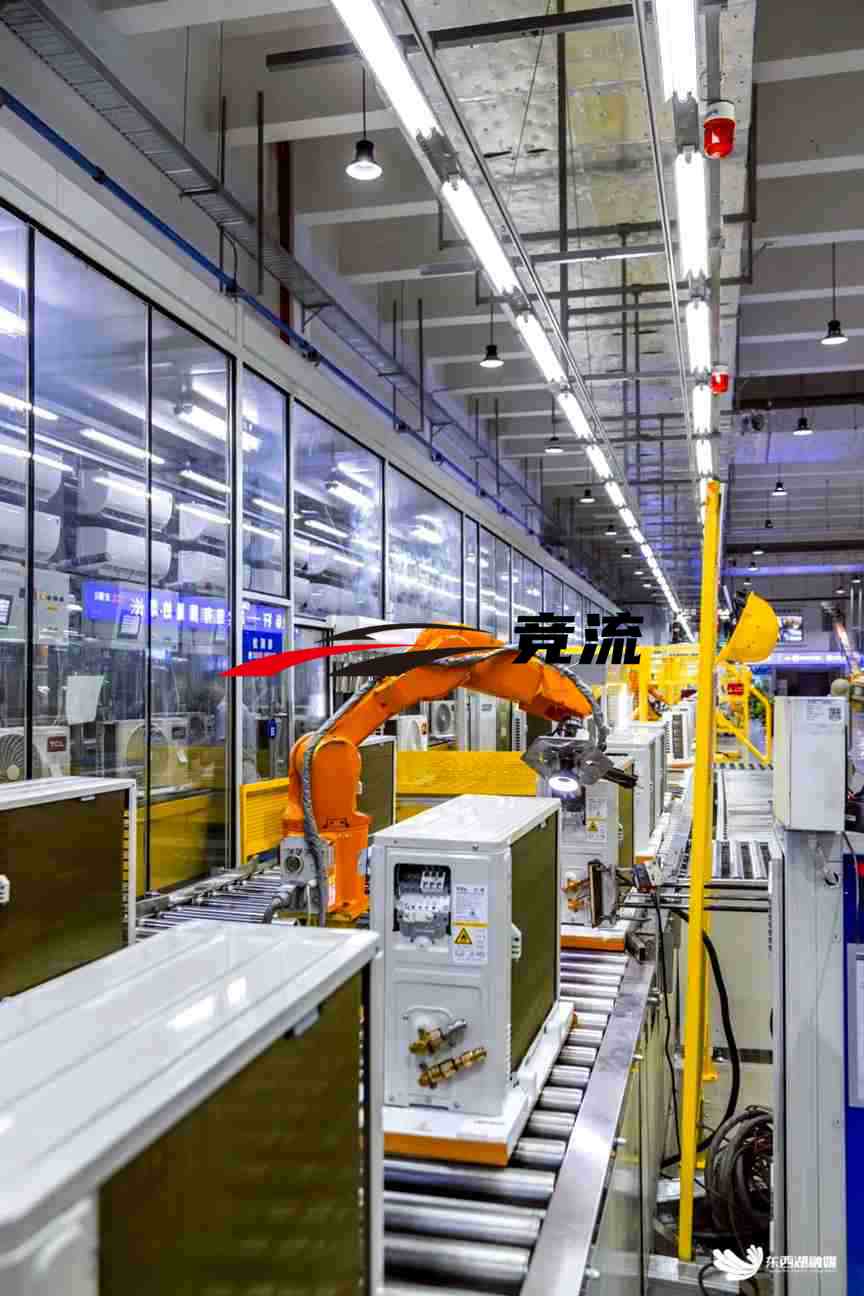
The production line integrates a six-axis industrial robot (as shown in the orange robotic arm) to undertake heavy physical and high-precision processes such as compressor handling, copper pipe welding, and sheet metal parts locking. The robot is equipped with a visual guidance system that can automatically identify the position deviation of incoming materials and compensate for trajectory. The welding station adopts the dual process of argon arc welding + flame brazing, and the leakage rate is controlled below 0.01%.
3. Digital quality control
The MES manufacturing execution system is deployed across the line, and key workstations are equipped with online testing equipment such as intelligent torque wrenches, vacuum leak detectors, and halogen leak detectors. Each product generates a unique traceability code and records 128 process data such as compressor model, refrigerant charge volume, vacuum level, and electrical safety test to achieve full quality life cycle management.
3. Core production processes
1. Sheet metal parts pretreatment and assembly
– The shell is pre-treated by degreasing, phosphating, and electrostatic spraying, and the salt spray test lasts for more than 1000 hours
– Automatic riveting of side panels and top covers is completed with servo pressing machines, replacing traditional manual locking screws
2. Refrigeration system assembly
– Assembly of two units (evaporator/condenser): The robot automatically penetrates and expands the tube to ensure heat exchange efficiency
– Pipeline welding: robotic flame brazing, nitrogen protection for oxidation, solder joint fullness ≥95%
– Vacuum pumping and refrigerant charging: Double-stage vacuum pump pumps to-0.1MPa, quantitative charging error ±2g
3. Electrical system installation
– Automatic plug-in of PCB board, wave soldering
– Frequency conversion module cooling silicone grease is automatically applied, and the thickness is controlled to 0.2-0.3mm
– High-voltage insulation test (AC 3750V/1min), grounding resistance test (≤0.1Ω)
4. Final assembly and testing
– Intelligent selection and press installation of compressor damping pads
– Inspection and operation test of the whole machine: switching between cooling/heating modes, noise detection (≤55dB), preliminary screening for energy efficiency
4. Characteristic advantages of the production line
dimension technical indicators
automation rate Automation rate of key processes ≥75%
Replacement time Product switching ≤30 minutes
straight-through rate One-time offline pass rate ≥98.5%
energy consumption level Energy saving 25% compared to traditional production lines
The production line adopts yellow safety fences for man-machine isolation, and is equipped with safety gratings and emergency stop chains, which comply with ISO 13849 safety standards. The transparent glass partition design is easy to visit and inspect, reflecting the demonstration value of the “black light workshop” of modern factories.